

Dental Crowns in Mackay
Dental Crowns: Why You Shouldn’t Delay Your Treatment Before the End of the Year
A dental crown covers and protects a tooth with significant damage, a large filling, a crack, or reduced strength after root canal treatment. When your dentist recommends a crown, timing often matters because the tooth still carries everyday chewing forces while treatment remains unfinished.
Many private health extras policies use annual limits for major dental services. Some reset on 1 January, while other policies follow different arrangements. Checking your cover early helps you understand your rebate without allowing insurance dates to drive a clinical decision.
Why Dentists Recommend Crowns
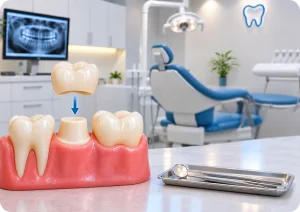
A crown sits over the prepared tooth and restores shape, function, and protection. Your dentist might recommend one after:
- A large filling has left limited natural tooth structure
- A tooth has cracked or broken
- Decay has significantly weakened the tooth
- Root canal treatment has reduced tooth strength
- An existing restoration no longer provides suitable protection
Not every damaged tooth needs a crown. Your dentist will assess how much sound tooth structure remains, where the damage sits, how your bite loads the tooth, and whether another restoration suits the situation.
What Happens When a Weak Tooth Stays Unprotected?
A tooth needing a crown might continue to function for a period, but chewing places repeated force through weakened enamel, dentine, fillings, and cracks. A crack might extend further. A large filling might fracture with part of the surrounding tooth. A root-treated tooth might break before the final restoration is placed.
Delay does not guarantee a fracture, yet the risk deserves discussion when your dentist has already recommended protection. If a fracture extends too far below the gum or into the root, restoring the tooth becomes more difficult. In some situations, removal becomes the remaining option.
 Decay and Infection Need Separate Attention
A crown does not treat active infection by itself. Symptoms such as lingering sensitivity, pain when biting, swelling, or spontaneous toothache deserve prompt review. Where infection affects the pulp, root canal treatment might be discussed before the final crown.
Speaking with a dentist in Mackay early gives you time to understand the condition of the tooth and the available options before symptoms become harder to manage.
Why End-of-Year Health Fund Timing Matters
Private health cover often separates general dental from major dental. Crowns frequently sit within major dental, depending on the insurer and policy. Check your annual limit, remaining balance, reset date, waiting period, and the rebate linked with the proposed dental item number.
Some major funds reset annual extras limits on 1 January and do not carry unused annual limits into the following year. Other products use different dates or structures. Ask your insurer directly before relying on an estimate.
Do Not Delay Necessary Care Only for a New Benefit Year
Health fund planning is useful, but clinical need comes first. If your dentist believes a tooth has a meaningful risk of further breakdown, waiting solely to access a new annual limit might expose the tooth to more damage.
Some treatment plans allow flexibility. If the tooth remains stable and your dentist considers a later appointment appropriate, timing might be arranged around your schedule and cover. Discuss any delay with your dentist before making a decision from insurance information alone.
What Happens During Crown Treatment?
Your dentist examines the tooth and reviews relevant X-rays where needed. They explain why a crown is being considered and discuss alternatives.
Treatment often involves preparing the tooth, taking a digital scan or impression, and fitting a temporary crown while the final restoration is produced. Some systems produce a crown within one appointment, while other cases require a later fitting visit.
At the final appointment, the dentist checks fit, bite, appearance, and comfort before securing the crown. Crowns use materials such as porcelain, zirconia, metal alloys, or combinations of materials. Material selection depends on tooth position, bite forces, appearance goals, remaining tooth structure, and other clinical factors.
Mackay Family Dental Clinic provides assessment and restorative care based on the condition of each tooth. If a crown has already been recommended, or if a tooth feels cracked, weak, or painful, contact the clinic to discuss timing and available options.